
Understanding the Information Available
The GreaseCloud Dashboard provides a range of information to help users understand grease activity and investigate potential issues.
This chapter explains the key monitoring information available within the system, what it represents and how it can be used to support troubleshooting and maintenance activities.
Understanding how to interpret this information will help users investigate alerts more effectively and identify developing issues before they become significant problems.
Grease Activity
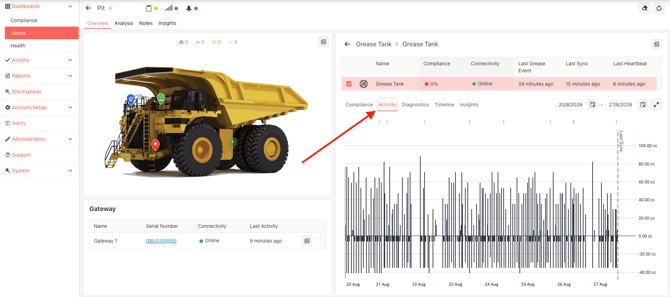
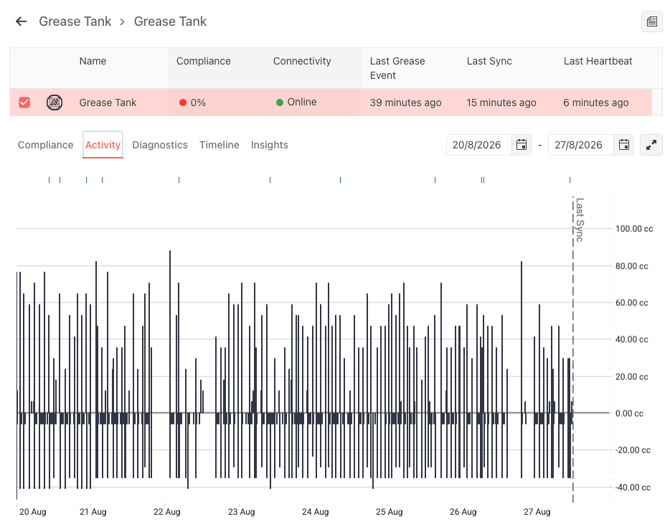
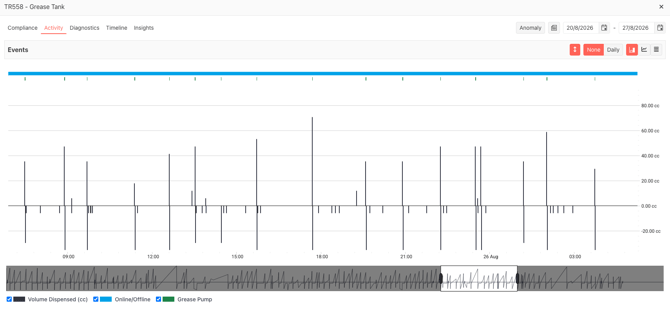
Grease activity information shows when grease flow has been detected by an Endpoint at a monitored lubrication point.
Reviewing grease activity helps users understand whether grease is being delivered when expected and whether delivery patterns have changed over time.
When reviewing grease activity, users should look for:
- Missing grease events
- Reduced grease activity
- Increased grease activity
- Irregular grease delivery
- Changes from normal operating behaviour
Grease activity information is often one of the most useful tools for understanding why an alert has been generated and what may need further investigation.
Compliance
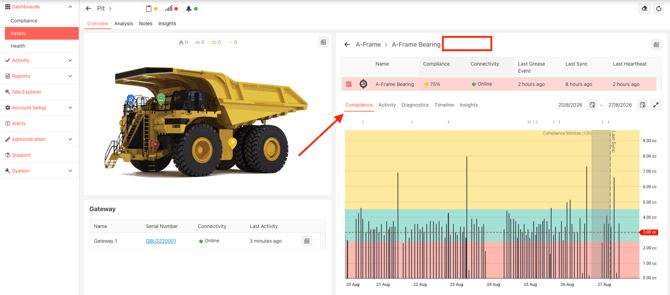
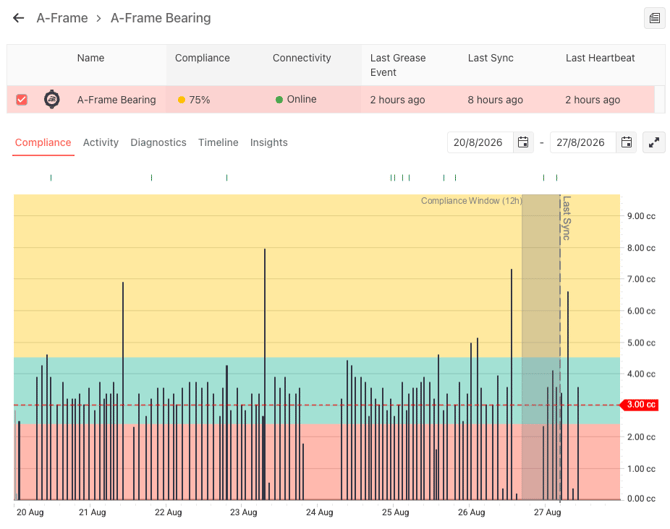
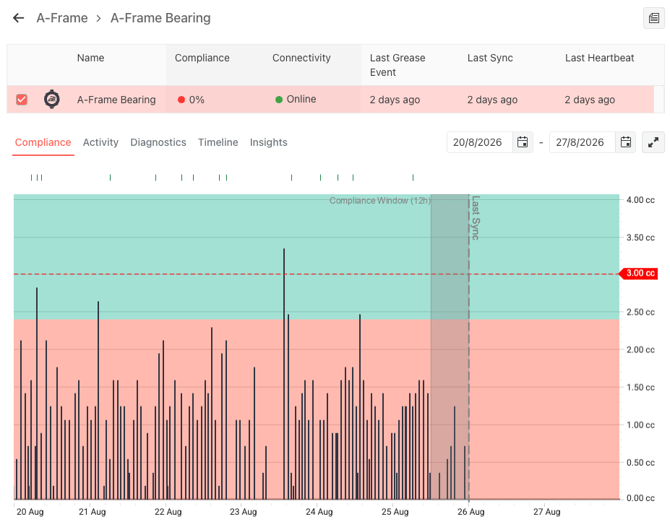
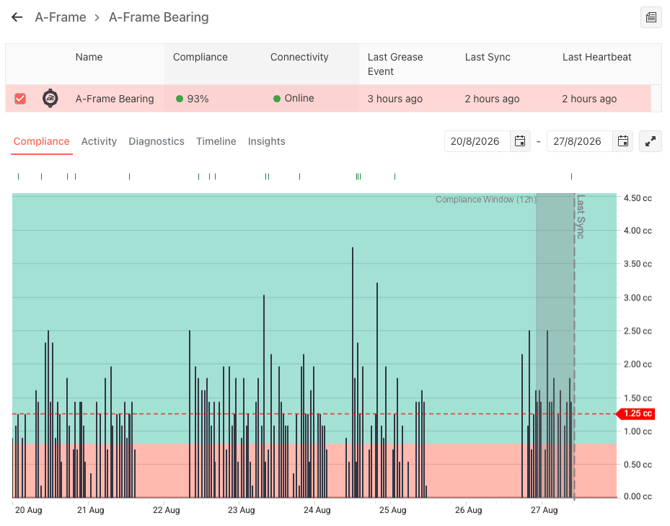
Compliance measures how closely actual grease delivery aligns with the configured lubrication requirement.
The lubrication requirement defines:
- How much grease should be delivered
- How often grease should be delivered
A compliance value approaching 100% indicates that grease delivery is closely matching the expected requirement.
A reduction in compliance indicates that actual grease delivery is not matching the configured lubrication requirement and may require investigation.
Reduced compliance may occur when:
- Less grease than expected is being delivered
- More grease than expected is being delivered
- Grease delivery is inconsistent with the configured requirement
Compliance should be used as an indicator that grease delivery is not meeting expectations, rather than a diagnosis of a specific fault.
The cause of reduced compliance can be determined through further investigation of the lubrication system and operating conditions.
Pressure Monitoring
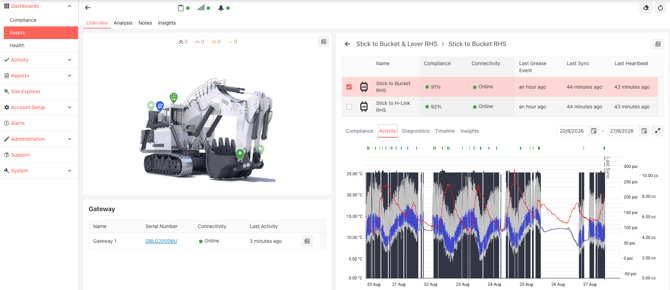
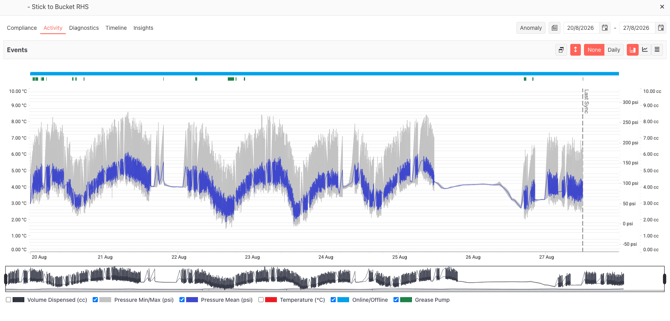
Where pressure monitoring is available, pressure information can provide additional insight into lubrication system performance.
Changes in pressure behaviour can indicate that conditions within the lubrication system are changing and may help identify developing issues before they become significant failures.
Pressure information should be assessed for:
- Sudden changes
- Consistent increases
- Consistent decreases
- Irregular pressure behaviour
- Pressure conditions outside expected operating ranges
Pressure information should be reviewed alongside grease activity and compliance information to develop a more complete understanding of system performance.
As with compliance, pressure information identifies a condition. Further investigation is required to determine the cause.
Device Connectivity
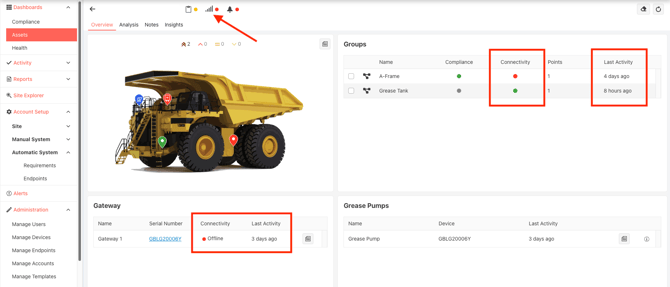
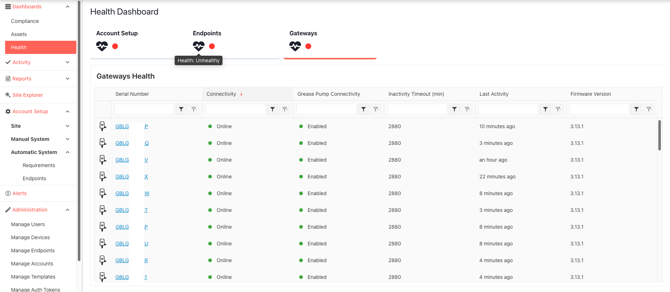
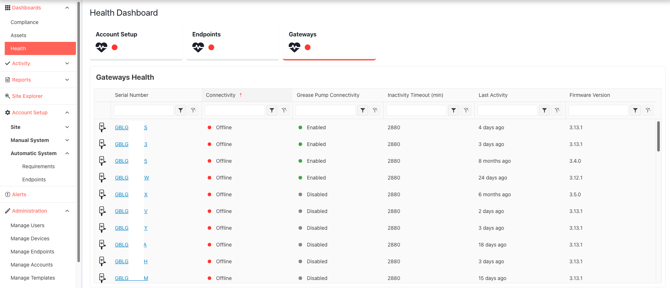
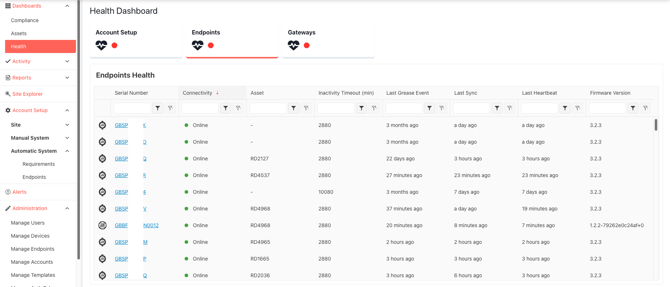
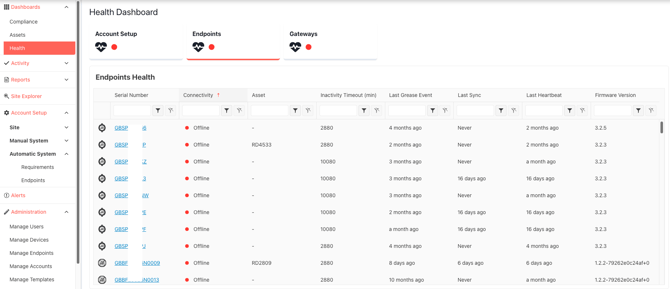
Device connectivity information helps users confirm that monitoring devices are communicating correctly and that monitoring data is being received.
Connectivity information may include:
- Online or Offline status
- Last communication time
- Signal strength information
- Device health indicators
Communication issues do not necessarily indicate a lubrication system problem. However, they may reduce visibility of grease activity and limit the ability to accurately assess system performance.
Devices that repeatedly lose communication or experience ongoing connectivity issues should be investigated.


Historical Trends
Monitoring data should not be assessed only as a single point in time.
Historical trends provide valuable context and help users understand how grease delivery is changing over time.
Trend information can help identify:
- Developing changes in grease delivery
- Recurring conditions
- Long-term performance changes
- The effectiveness of corrective actions
- Emerging maintenance concerns
When investigating alerts or recurring issues, reviewing historical trends can often help identify when a condition first developed and whether performance is improving or deteriorating.
Looking for Exceptions
The GreaseBoss Monitoring Solution is designed to help users identify exceptions to expected grease delivery performance.
When reviewing monitoring information, users should focus on identifying:
- Reduced compliance
- Missing grease activity
- Abnormal pressure conditions
- Repeated communication issues
- Recurring alerts
- Changes from normal operating behaviour
Lubrication points that consistently perform as expected generally require minimal attention.
Investigation efforts should focus on lubrication points and assets that show signs of abnormal performance or developing issues.
Using Monitoring Data Effectively
Monitoring data is most valuable when it is used to support maintenance and reliability decisions.
When reviewing monitoring information, users should consider:
- What has changed?
- When did the change occur?
- Is the condition improving or deteriorating?
- Has this happened before?
- Does the condition require action?
Monitoring information should be used alongside maintenance records, operational knowledge and physical inspections to develop a complete understanding of lubrication system performance.
The objective is not simply to review data, but to use the information to identify issues early, support troubleshooting activities and improve lubrication performance over time.